2,999 Conversations
Brightwork Vol. 01, Toronto · July 2026
Watch on YouTube, or read the written version.
In October 2025, our support team at STOQ had 2,999 conversations with merchants. Four years earlier, it was two of us answering about ten messages a day.
By then the inbox never emptied. Every day brought a new kind of problem, and most of them ended up with me. That month I burnt out. I spent a week on the couch playing Planet Coaster, because I couldn’t face anything else.
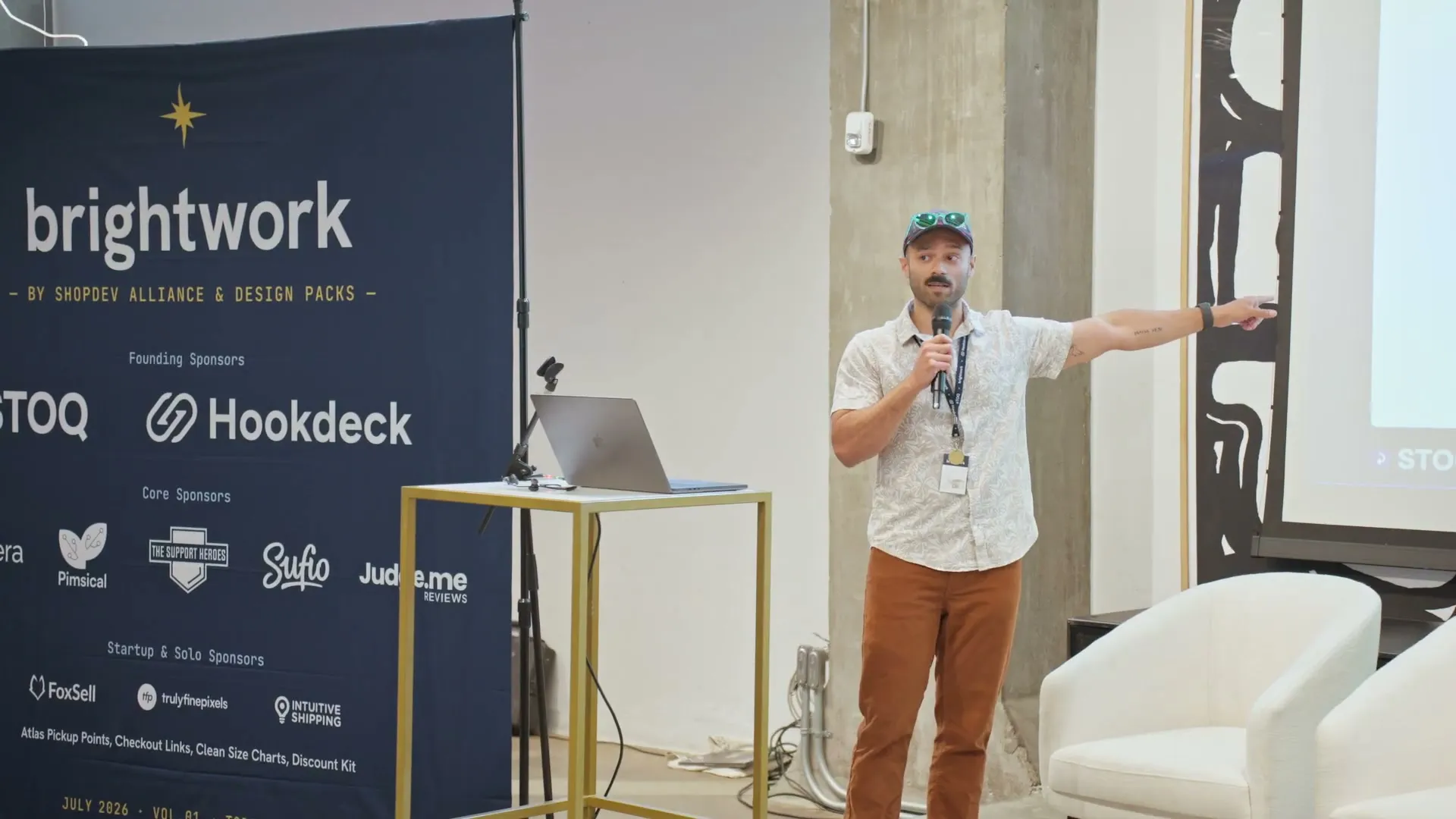
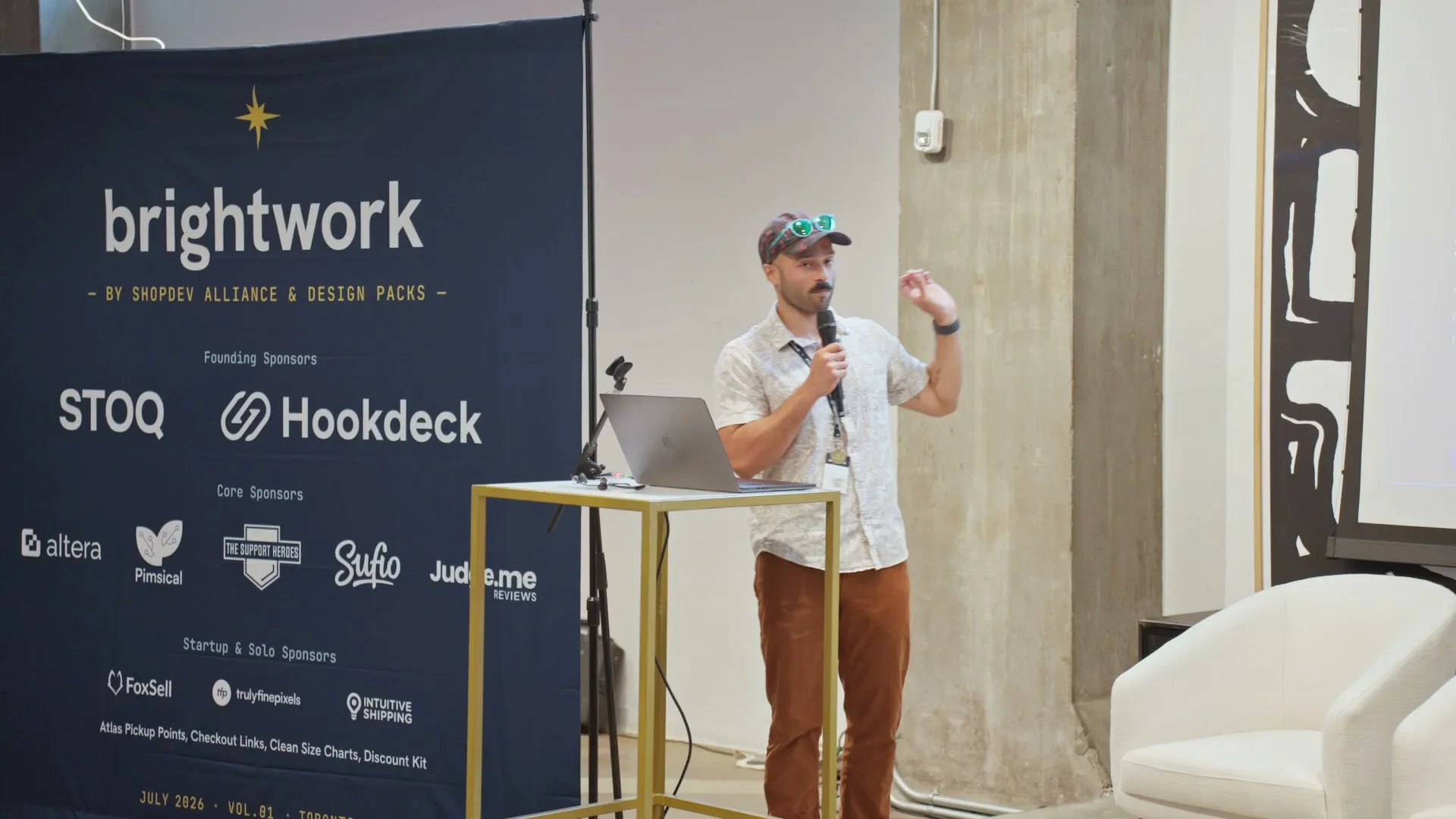
What I wanted most that week was someone who had been through it to tell me what they’d learned. This summer I got to try being that person, for a room full of Shopify app developers at Brightwork in Toronto, the gathering for Shopify builders after DotDev. We sponsored it as STOQ, because a community like this is what I wish I’d had back then.
This post is the talk, written down.
What STOQ is
STOQ helps Shopify stores keep selling when they run out of stock. It started in 2022 with back in stock alerts. In 2024 we added preorders, and today STOQ is the best Shopify app for preorders. More than 40,000 stores use it, and it’s rated 5.0 across more than 3,800 reviews.
Kartik and I built it with no outside money. It’s the third company we’ve started together.
In 2025, Shopify asked us to stop by their booth at Editions. We thought we were picking up some swag. Instead they told us STOQ was one of the 25 best Built for Shopify apps. We hadn’t applied. Their team had looked through thousands of apps and picked the ones that best showed what an app on Shopify should be.
It meant a lot, because it rewarded the things we care about most:
- Most stores are run by one person. Our software has to just work for someone who has no time to learn it. No tutorials, no guesswork.
- It should feel like part of Shopify. We built STOQ inside the Shopify admin with Shopify’s own design system from early on, and we were one of the first apps to meet the Built for Shopify standard.
- Support is part of the product. Our team is there around the clock, and they’re trained on Shopify, not just on STOQ. Our reviews mean more to us than any other number.
Getting there taught us four things.
1. Take your time with the foundations
When we started, there were two of us. I was in Toronto and Kartik was in Bangalore, and our days overlapped for about four hours. We ran the company through long WhatsApp messages.
A surprising number of those messages were arguments about names. What should we call this table? What word will a merchant see the first time they open the app? We would go back and forth for hours over a single model.
It felt slow, and most startup advice would have told us to stop. Move fast, change it later. But we never did change it. Four years on, we still use the same three words for preorders and back in stock alerts, and the same models underneath them. Everything we’ve built since sits on top of those early choices.
That’s what I mean when I say primitives compound and features depreciate. A feature you ship today will feel dated in a year. A good name or a clean model keeps paying you back.
You also won’t get another chance to fix them. Once you have customers, every month brings a new kind of fire. One month support is slow. The next, emails stop arriving. Then webhooks break, or Shopify changes something you rely on. There is never a quiet week to go back and rebuild the basics, so take the time while you still have it.
2. Split out roles before you need to
In 2024 the work outgrew the two of us. We hired two engineers and our first support person.
Before that support hire started, I wrote a 40 page handbook. It covered everything, from how to greet a merchant to when to ask for a review. From the first day, support was its own team with its own way of working.
Today I barely recognise that handbook. The team has rewritten it and grown it in ways I never would have thought of. They’re a big part of why merchants leave the reviews they do. I don’t do support anymore, and I don’t need to.
That only happened because we separated support early, before it became an emergency. I try to think about the business the way I think about the product. If a part of it can stand on its own, give it an owner and a system, and do it sooner than feels necessary.
3. Build a brand early
The top 25 news came with an uncomfortable truth. Merchants loved using the app, but most of them couldn’t tell you what it was called.
That was our fault. The app was called Restock Rocket, and because the App Store rewards keywords in names, we had shortened it to RR. We had a great team and a product we were proud of, and our name was two letters.
So we renamed it STOQ. I’m still not sure about the logo, but I know where we’re headed.
Anything you build can be copied: features, docs, onboarding. With AI, a whole app can be cloned in an afternoon, and the App Store is about to fill up with clones. What nobody can copy is how you think and how you treat the people who use your product. That’s your brand, and it takes years to build, so start early.
YouTube went through this a while ago. Anyone can make a tech review now, and there are more channels than ever, but people still remember MKBHD and Linus Tech Tips. Ask why and most people can’t say exactly. They just know those channels are good. Those creators worked out who they were early, and it stuck.
4. Change how you work while things are on fire
Today we’re a team of 20 with a few apps, and support handles around 3,000 conversations a month.
The mistake we made on the way here was not changing how we worked as we grew. When every day brings a new problem, you spend your time making things 5% or 10% better. You never stop to ask whether the work itself should look different.
For me, the change started as a weekend hobby. I bought a small Linux box to stream movies. Then I installed Claude on it. Then I wanted to reach it from any computer, then from my phone, and then I wanted to talk to it the way I’d talk to a person. Somewhere along the way I realised how capable agents had become.
That hobby turned into an internal agent at STOQ. Two months before the talk it didn’t exist. Now the team can’t imagine working without it. It triages support tickets, tracks our App Store rankings, digs into tricky merchant problems and helps migrate APIs. The team’s job has shifted to showing up in Slack and teaching it to do more.
This is where I think support is going. Not people using AI on the side, but agents doing the work, with people teaching them and stepping in when it matters.
Someone asked how to get a team to work this way. My answer was to go first. I stopped doing the work myself and started asking the agent in Slack instead. People saw it and started doing the same. Your team will copy what you do much faster than anything you tell them.
It is painful to make time for this when everything is on fire. Do it anyway.
On burning out
The first question after the talk was how I got over the burnout.
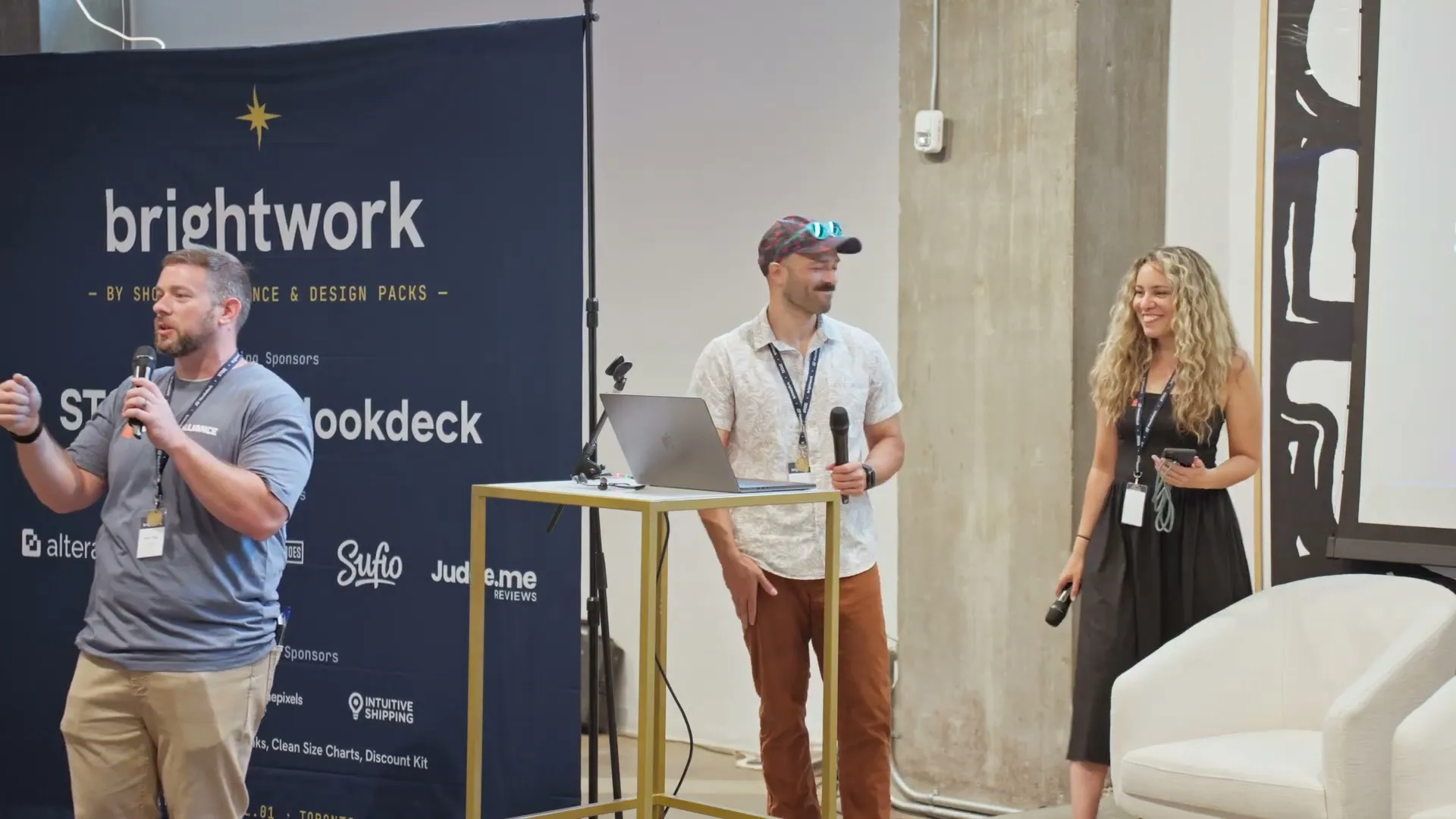
Planet Coaster helped for a week. What helped for longer was writing. I keep a journal now. Writing a problem down reminds me that it’s today’s problem, and that tomorrow it will probably be gone. It doesn’t make the anxiety disappear, but it makes it smaller.
I still burn out sometimes. I’m still learning. This site is part of that.
If you’d rather hear it the way I told it, watch the talk on YouTube.